Nov 16, 2026·Grant Wise
Real estate team partnerships: Andrew Becker on borrowing infrastructure to scale
Real estate team partnerships that borrow infrastructure—Andrew Becker on co-marketing, good-partner rules, and scale without rebuilding every tool.
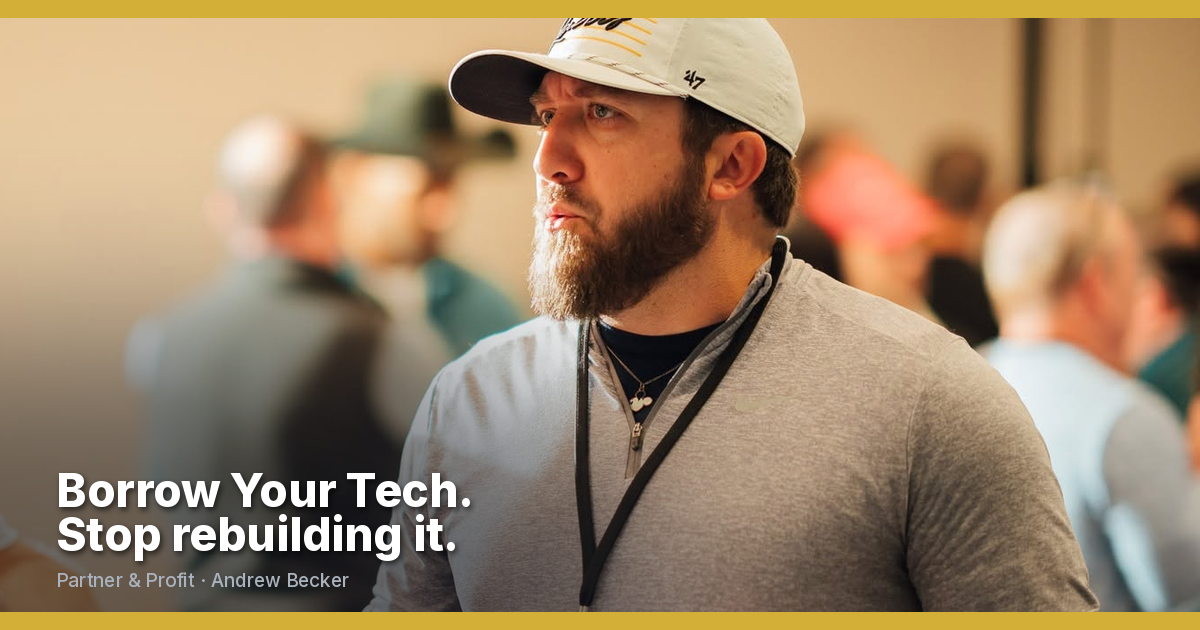
You can spend six weeks trying to rebuild a dialer, a CRM track, and a list stack your team “almost” has.
Or you can partner with someone who already spent the time, energy, and capital—and go live while your ads are still running.
That’s the fork most real estate team partnerships hide in plain sight. Build everything yourself. Or borrow infrastructure that already works.
Here’s what the DIY path costs in real life. Your ISA sits half-trained on a half-built process. Warm seller leads cool while you argue about tools. Agents invent their own workarounds. You paid for the traffic. You still miss the speed. The partnership path is the opposite: pick experts who already solved the hard part, plug in, and put your hours back on pipeline.
Here’s the install. Stop rebuilding what specialists already finished. Turn military-style checklists into team ops. Grow one-to-many with co-marketing. Be the partner people want in the room. Show up in community until trust compounds.
Build vs borrow: stop reinventing the stack
Team leaders who spend $10k+ per month on ads feel this gap first. So do shops closing 100+ homes a year. You already buy volume. The slow leak is not always creative. It’s the weeks you burn rebuilding tools and processes someone else already ships.
“Borrow infrastructure” sounds soft until you put a calendar on it. Andrew’s frame in the episode is blunt. Some people see a cool tool and say, “I need to build that.” Others say, “Someone is already an expert—partner and get access faster.”
That second move is not lazy. It’s smart spend. You keep ownership of your brand and your client experience. You skip the R&D tax on features that are not your edge.
Practical filter for your leadership meeting:
- Name the rebuild. Dialer. E-sign. Direct mail. List data. Training track. Which of these are you rebuilding poorly right now?
- Ask who already owns it. Is there a partner who spent years on that exact problem?
- Price the weeks. What does six more weeks of half-stack cost in cold leads and agent confusion?
- Plug in, then measure. Intros. Usage. Response time. Pipeline. If you can’t see outcomes, you didn’t install a partnership. You added a login.
- Keep what only you can do. Culture. Local trust. Client care. Agent coaching. Don’t outsource your core.
Borrowing is how you scale real estate team partnerships without pretending every feature needs a custom build. Your job is the scoreboard and the client. Their job is the piece they already perfected.
From Pentagon checklists to team ops you can train
Andrew Becker’s background matters here because it explains the ops habit—not because military talk sounds cool on a blog.
Show notes and the episode: about seven and a half years with the Air Force at the Pentagon. Then real estate around 2013. He ran operations for a team in the DMV (DC, Maryland, Virginia). Later he spun off real estate–related companies. In the episode he names examples like Billions (team ops on Salesforce), Brighter PPC, and a probate lead-gen / education path. Those are his episode examples. They are not Comarketing products.
His transfer is simple. Nuclear work ran on checklists, processes, and policies. Same thing the same way. Predictable. Repeatable. A little boring. Necessary. He carried that into real estate ops.
High-volume teams need that same boring layer. Not heroics. Not “our best agent remembers how.”
Install the habit:
- Write the steps agents should follow when a lead hits.
- Name an owner for each partner lane and each tool lane.
- Review weekly the same way you review ads.
- Cut or keep based on results—not vibes after one lunch.
If your partnership work only lives in someone’s head, it won’t survive the next hire wave. Checklists scale. Memory doesn’t.
Co-marketing for real estate teams: one-to-many, not one-to-one grind
Paid ads put your name in front of strangers. Co-marketing for real estate teams puts your name in front of people who already trust someone else.
Andrew’s growth side of partnerships has two lanes in the episode:
- Tools and specialists you integrate so your stack gets stronger without a full rebuild.
- Affiliate-style partners and audience sharing so distribution compounds.
The co-marketing move is audience sharing done as a two-way street. He describes partnering with a data company (he names Prime Tracers in the episode) for joint workshops—borrow their audience, teach something useful, send trust both ways. He also describes daisy-chaining intros: introduce partners to partners when it’s a real fit, instead of gatekeeping.
That is how you move from one-to-one cold outreach to one-to-many. Early on, Andrew says he was grinding one-to-one. Later, webinars and workshops with partner audiences became the repeatable path—value first, clear next step, then do it again next week and next quarter.
Why it works for a volume team:
- Trust transfers. It’s one thing if you say you’re solid. It’s stronger when a partner their audience already likes says the same.
- Speed. You borrow reach you did not pay to build from zero.
- Complement to paid. This does not replace your ad account. It gives you another dial when creative gets tired or CAC climbs.
Track co-marketing like ads. RSVPs. Show rate. Meetings booked. Kept relationships. If it isn’t on a board, it’s a favor—not a growth lane.
Good partner rules: don’t be greedy, give more than you take
A preferred partner program real estate leaders talk about fails for the same reason weak vendor lists fail. Someone gets greedy. Someone disappears after the first intro. Someone treats the other brand like a lead dump.
Andrew’s tips from the episode stay practical:
- Don’t be greedy. Partnerships need to be a two-way street.
- Value to the end user comes first. Revenue share is secondary if the client experience is weak.
- Give more than you take. Help the way you would want to be helped.
- Stay clean. Don’t go behind a partner’s back.
- Like the people you work with. He says he’s at a stage where he wants colleagues he enjoys—not toxic seats in the business.
- Do the small keeps. Share a post. Keep the weekly catch-up. Fly in when the relationship matters. Stay in touch even when there’s no deal on the table.
That last part is the one team leaders skip. You already know how to buy traffic. The harder skill is being easy to partner with when there’s nothing to invoice yet.
If you want a preferred-partner style bench that compounds, start here. Be useful. Be consistent. Be someone people are glad to put in front of their audience.
Consistency in community multiplies lead flow
Masterminds, partner communities, and shared rooms only work if you keep showing up.
Andrew’s point in the episode mirrors Grant’s framing on the show: one workshop in front of a big audience helps a little. Showing up again and again builds recognition. People start to feel like they know you. Then the conversation about working together gets easier.
Same rule as seller mail. You don’t mail once and quit. You stay present until recognition sticks.
For team leaders:
- Pick 1–2 communities where your ideal partners already gather.
- Put a cadence on the calendar—monthly value, not random drive-bys.
- Teach what you actually do. Prove the work. Soft CTA to meet if there’s fit.
- Introduce people when it helps them—even when you don’t sit in the middle of the deal.
Consistency is how you scale real estate team partnerships without turning every week into a cold restart.
What Andrew Becker adds (proof, not the outline)
Andrew Becker (@IAmAndrewBecker) is a real estate entrepreneur and operator. Air Force / Pentagon background. Real estate from about 2013. Ops for a DMV team. Then multiple real estate–related ventures he describes on the show—including Billions, Brighter PPC, and probate education / lead-gen work.
In Partner & Profit Episode 03 he makes the partnership case concrete:
- Borrow infrastructure instead of rebuilding every feature (his dialer / DocuSign / direct-mail style examples inside a team ops stack).
- Use co-marketing and affiliate-style partners to grow one-to-many.
- Be a good partner: don’t be greedy, give more than you take, work with people you like.
- Stay consistent in community and masterminds so influence and lead flow compound.
His blunt line for builders: you could try to invent your own dialer stack—or partner with people who already invested the capital and ship it when you need it.
Listen: Leveraging Strategic Partnerships to Grow Your Real Estate Team with Andrew Becker
Team-leader checklist this week
- List every tool, training track, and vendor lane you’re rebuilding by hand. Mark which ones a specialist already owns.
- Pick one “borrow” move this month. Plug a finished stack instead of another DIY rebuild.
- Write one ops checklist your newest agent could follow without a hallway explainer.
- Name one co-marketing partner with a shared audience. Plan one workshop or value session—not a pitch dump.
- Put partner intros on a scoreboard next to ads. Owner. Touch. Outcome.
- Audit your own partner manners. Where are you taking more than you give?
- Schedule one community touch that isn’t an ask—share, intro, or check-in.
- Share the episode with leadership. Assign one owner to build-vs-borrow and one owner to co-marketing cadence.
FAQ
How can real estate team partnerships help a volume shop grow faster?
They let you borrow infrastructure instead of building every tool and process from scratch. That can mean faster growth, smarter use of time and budget, and a stack you can train—not a pile of half-finished rebuilds.
What military lessons transfer into real estate team ops?
Predictable, repeatable processes. Checklists. Same steps done the same way. That habit helps teams scale without relying on one person’s memory.
How do co-marketing and affiliate partnerships help real estate teams?
They create exposure and trust transfer. You grow one-to-many with shared audiences instead of grinding only one-to-one outreach. That complements paid ads; it doesn’t have to replace them.
What are Billions, Brighter PPC, and probate examples doing in this episode?
They are Andrew’s own episode examples of companies and specialty paths he built or teaches around. Use them as context for how he thinks about ops, ads, and niche lead gen—not as Comarketing product claims.
What makes someone a good partner in this conversation?
Don’t be greedy. Keep it a two-way street. Give more than you take. Put value to the end user first. Surround yourself with people you genuinely like. Show up consistently in community.
Next step
Want preferred-partner economics with owners, clean partner manners, and a scoreboard next to ads? Want that without turning your team into a vendor-management mess? See if your market is open: Apply / check market availability.
Listen to the full episode: Leveraging Strategic Partnerships to Grow Your Real Estate Team with Andrew Becker
Questions this article answers
They let you borrow infrastructure instead of building every tool and process from scratch. That can mean faster growth, smarter use of time and budget, and a stack you can train—not a pile of half-finished rebuilds.