Nov 24, 2026·Grant Wise
Real estate strategic networking: Kevin Davis on serve-first, win-win structure, and follow-through
Real estate strategic networking that isn’t extractive—Kevin Davis on serve-first, win-win structure, listening, and follow-through.
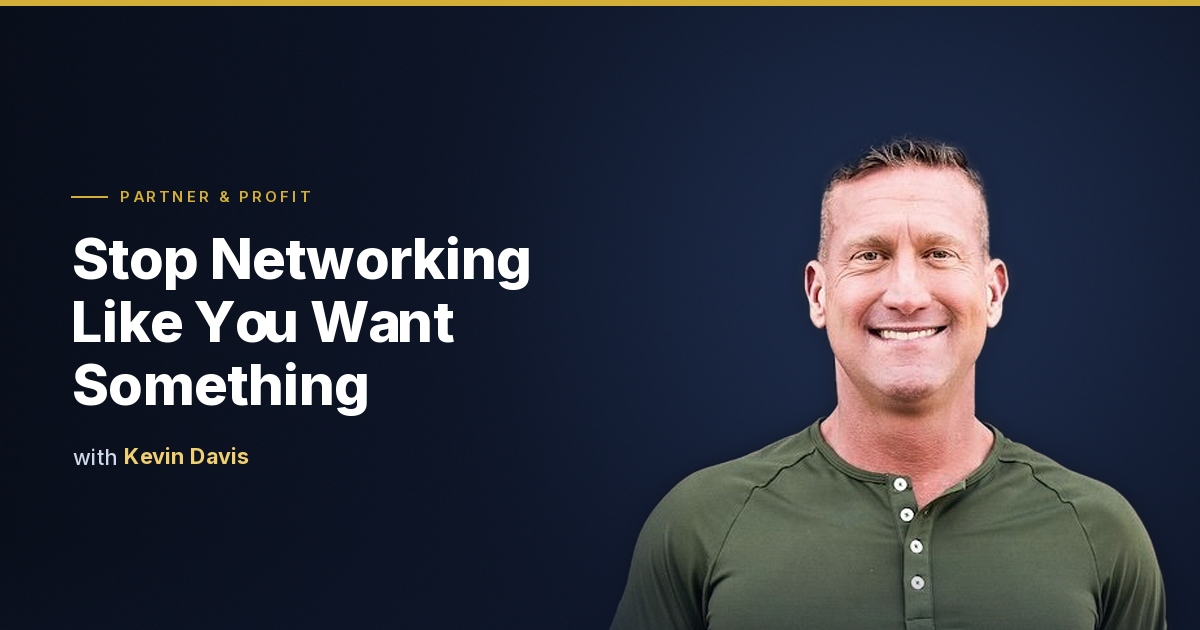
When you walk into a room thinking “what can I get?” — do partners lean in, or do they brace?
Most networking fails before the pitch. The other person feels the take. They go polite. Then quiet. Then gone.
Real estate strategic networking that works starts different. Serve first. Listen hard. Trade energy both ways. Structure a true win-win—not a “compromise” where both sides lose a little and smile. Follow through. Stay real. Do that while AI makes shallow outreach cheap, and in-person trust gets more valuable, not less.
Here's the plan for team leaders already buying $10k+/mo in ads—or closing 100+ homes a year. Stop treating rooms like extraction. Build partner conversations that open doors instead of walls.
Real estate strategic networking starts with what you give
Kevin Davis names the mistake in plain talk. We think more about what they can do for us than what we can do for them. That puts people on the defensive.
You have felt this from the other side. Someone “wants to grab coffee.” Five minutes in, it is a veiled lead ask. Or a spray-and-pray exclusivity pitch. Or a handshake that means “send me your buyers” with nothing built for them.
Partners have great BS detectors. Kevin says that on the show. If you disguise a transactional desire as a relationship talk, they smell it. The deal dies before you send the MSA.
When you lead with help, people stop bracing. Then you can talk exclusivity, SLAs, and shared economics without sounding like a taker.
Serve first—then structure the deal
Kevin calls relationships his superpower. Not charm. A serve-first partnership mindset. He asks: how can I serve you in your business? He looks for chances to help before he asks for access.
He also says he is a generalist. Over 30 years as an entrepreneur. Dot-com growth stories. E-com. Coaching. TV consulting. Enough range to meet people where they are—an eight-figure owner one day, a car guy the next, sometimes both on one call. He frames that as a conduit. Speak to their world. Do not force your deck first.
For team leaders building preferred partners relationship building that lasts:
- Open with their bottleneck—hiring, scheduling, reviews, capacity—not your lead volume.
- Give a real intro, a useful idea, or a short win before you ask for category exclusivity.
- Sequence trust, then terms. Coffee that is only a pitch trains partners to dodge you.
Serve-first is not charity. It is order. Help first. Structure second. That is how networking tactics for team leaders turn rooms into pipelines—not more drained calendars.
Listening and energy exchange (or you leave empty)
Great conversation needs an energy exchange both ways. Kevin is clear: you give as much as you get. Unequal talks are memorable for the wrong reason. You leave thinking you never want that call again.
Grant shares a post-event example on the show. Someone still running hot after a long speaking day. Talk, talk, talk. Grant says it felt like they sucked the life out of him. He needed a nap. Intentions can be fine. Energy can still drain the relationship.
Kevin also ties listening to practice. He ran a lot of podcasts. After about 200 episodes, people close to him noticed he listened better—because recording forces you to shut up and pay attention instead of waiting to talk.
Install this week:
- Preferred-partner meetings need listening space, not only a pitch deck.
- Score the room after. Did both sides leave with energy—or did one leave empty?
- Train your bench on discovery questions before offer slides.
- Cut chronic drainers from the “maybe exclusive” list. Exclusive access is earned by equal exchange, not loud energy.
Win-win is not lose-lose “compromise”
Grant says everyone has to craft win-wins. Kevin pushes past soft language.
He uses a hard definition of compromise: each person losing in a way they do not feel terrible. Someone still gives something up. That is a quiet deal killer over time.
He wants paths where neither side has to lose. His pricing example: force a coaching offer that does not fit a partner’s price point, and both sides twist. Better to find a structure both can win—or walk.
Grant’s line on the show matches: you should not have to lose so they can win. Many alliances fall apart when that becomes normal.
For win-win real estate partnerships, write it down:
- What the partner gets (category rights, warm intros, co-marketing)
- What the team gets (response rules, client care standards, shared economics)
- What the client gets (cleaner experience, fewer headaches)
- What happens if volume is lower than hoped
Vague “we’ll figure it out” is how exclusivity promises turn into spray-and-pray. Clear terms are how preferred partners become scoreboard work—not vibe work.
Follow-through and authenticity—where good talks die
Kevin’s deal flow is simple. Serve. Brainstorm fit. Put the next live touch on the calendar. Drive the ball if you own the process. Follow up like any other sale—without pretending it is pure altruism. Both businesses know they are trying to build each other.
He also names the kill shots: fake relationship talk over a transactional ask, and lack of authenticity.
At volume, authenticity means your story matches your ops.
- If you promise exclusive leads and then shop every vendor in town, you taught the market not to trust exclusivity.
- If you say serve-first and only show up when you need a co-op check, partners learn to ghost.
- If you never follow up after the “great call,” you were networking theater.
Name an owner for partner follow-through. Touch. Intro done. Issue closed. Cut or keep. Same discipline you use on ads.
AI makes shallow outreach cheap—IRL trust gets the premium
Kevin spends serious daily time in AI tools. He cites about three or four hours a day, and says he expects to use it even more. He still says AI is not as smart as people think. And it is weak at personal connection. In his view, we are years away from that changing in a real way.
He points to younger people putting more weight on IRL—in real life—interaction. Human trust stands out more when the feed is full of cheap, automated outreach.
This is not “quit ads.” Keep the ads that work. Pair paid reach with denser human partnership. Live dinners. Real follow-up. Preferred partners who know your clients’ names. That is the premium lane while everyone else sprays AI DMs.
What Kevin Davis adds (proof, not the outline)
Kevin Davis is a business coach and entrepreneur with 30+ years in the game. Dot-com growth. Retail e-com brands. Coaching and consulting across industries—not only real estate. He describes his edge as building a conduit with almost anyone by meeting them where they are and leading with service.
On Partner & Profit Episode 09 he covers:
- Extractive “what can I get?” networking that puts people on defense
- Serve-first as the open that opens real deals
- Listening practice (including podcasting as a training ground)
- Equal energy exchange vs conversations that drain you
- Win-win structure vs compromise-as-mutual-loss
- Follow-through and authenticity as deal savers
- Why human / IRL connection rises as AI cheapens shallow outreach
Listen: Kevin Davis Explains Networking Tactics for Real Estate Agents and Team Leaders
Team-leader checklist this week
- Rewrite your networking opener. Lead with their bottleneck—not your take.
- Audit three “preferred” relationships. Serve-first and equal energy—or extractive coffee?
- After each partner meeting, score energy exchange. Keep, coach, or cut.
- Replace vague compromise with written win-win terms (scope, exclusivity, SLAs, economics).
- Name an owner for follow-through. Next touch. Intros done. Issues closed.
- Protect authenticity. Do not market “preferred” if behavior is “whoever pays this month.”
- Add one IRL partner touch this month that AI cannot fake (dinner, ride-along, live review).
- Put partner outcomes next to ads on one scoreboard. Owner. Touch. Result. Cut or keep.
- Share the episode with leadership. Assign one owner to serve-first opens and one to deal follow-through.
FAQ
Who is Kevin Davis, and what “superpower” does he claim?
Kevin Davis is a business coach and entrepreneur. On the show he says he has been an entrepreneur for over 30 years—dot-com growth, e-com retail brands, coaching and consulting. He describes his superpower as building a “conduit” with almost anyone: speak to people where they are, and lead with how you can serve them—not what you can take.
What networking mistake puts people on the defensive?
Thinking more about what they can do for us than what we can do for them. Kevin says that posture puts people on defense. The shift is from “what can I get?” to “how can I help?”—then structure a real deal on earned trust.
Why do listening and energy exchange matter?
Kevin frames great conversation as an equal energy exchange. Unequal talks leave you never wanting another call. He also ties listening to practice—podcasting forced him to really listen. Grant shares a post-event drain story on the show: mismatched high energy after a long speaking day left him empty. Score energy after partner meetings the same way you score fit.
What kills partnerships in Kevin’s view?
Compromise framed as each side losing a little and living with it. Disguised transactional motives sold as “relationship” talk. Lack of authenticity. Weak follow-through after a good first conversation. He wants true win-wins where neither side has to lose for the deal to work.
Why do in-person relationships matter more as AI grows?
Kevin uses AI heavily day to day but says it is weak at personal connection. He sees IRL interaction rising in value—especially as young people push for real-life contact. Human partnership stays a growth lever beside paid ads. AI can start a search. It cannot replace trust in the room.
How can I reach Kevin Davis?
Kevin coaches business owners and entrepreneurs. You can find him at maxedoutman.com. Want partners who serve first in your market? Start with the step below.
Next step
Want real estate strategic networking that serves first, structures win-wins, and follows through—so preferred partners stop bracing and start building with you? Want that beside the ads you already buy, without more extractive coffee that dies? See if your market is open: Apply / check market availability.
Listen to the full episode: Kevin Davis Explains Networking Tactics for Real Estate Agents and Team Leaders
Questions this article answers
Kevin Davis is a business coach and entrepreneur. On the show he says he has been an entrepreneur for over 30 years—dot-com growth, e-com retail brands, coaching and consulting. He describes his superpower as building a “conduit” with almost anyone: speak to people where they are, and lead with how you can serve them—not what you can take.