Nov 18, 2026·Grant Wise
Real estate strategic alliances: Brandi Munguia on curated partners who pay
Real estate strategic alliances with standards—Brandi Munguia on lighthouse partners, clear rev share, and follow-through that stays kind and paid.
Most agents think partnerships mean more coffee chats.
More lunches. More “we should collab sometime.” More names in a phone with no owner and no next step.
Operators know better.
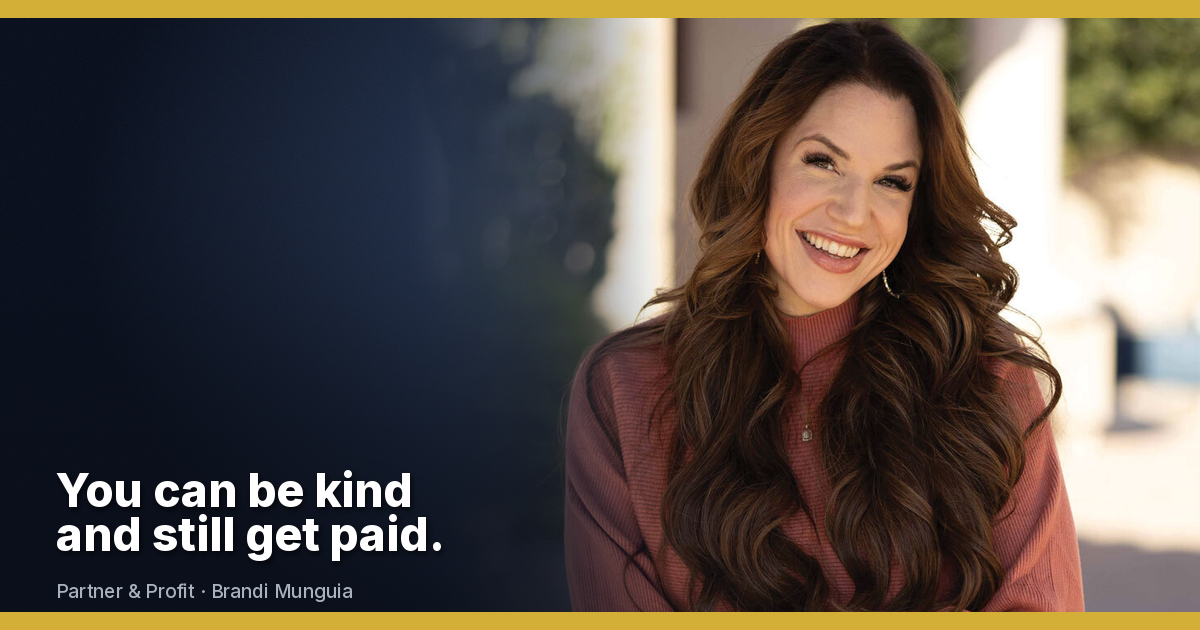
Real estate strategic alliances are not a mixer. They are a curated room with standards, written clarity, and follow-through. You can be kind and still get paid. Warm vibes are a great start. A clear deal sheet is what keeps them warm when money shows up.
Here’s the install. Curate who gets near your clients. Lead with contribution, not extraction. Write the rev share and the rules before the first intro. Then do what you said you would—every week.
Lighthouse rooms beat random partner lists
Brandi Munguia talks about “lighthouse” brands. Not as a soft slogan. As a space people want to reach.
In her world, curated masterminds and high-level business clubs become that beacon. Founders want a safe room with peers. Members want a peer set that raises the bar. The room is trusted because it is vetted. People cannot just buy a seat. They have to contribute, not only take.
Map that onto a team that spends $10k+ a month on ads—or closes 100+ homes a year.
Your market already has noise. Portal leads. Vendor spam. Agents posting “preferred partner” with no filter. A lighthouse team is different. Your preferred-partner list feels like a curated club—clean handoffs, clear standards, partners who protect the client when the job gets messy.
Steal Brandi’s curator habit:
- Vet before you amplify. Access to your past clients is brand equity. Treat it that way.
- Ask the contribution question. Can this partner give back to the room—or only extract leads?
- Hold the standard. If they would not fit a high-trust mastermind, they do not get preferred status on your team.
- Introduce with care. Strategic intros only work when the room stays high quality.
Curate like a lighthouse. Then every intro you make adds to the trust your ads already paid to earn.
People first is how profit compounds
Brandi’s line is simple. Put people first and profit follows. Put profit first and you lose the people.
She also names what a lot of leaders feel: a trust recession. Too many deals got transactional. People got guarded. Contribution is how you rebuild the room—not louder pitches.
For team leaders, that is a partner filter you can train:
- Does this lender, vendor, or affiliate lead with “how can I support you”—or “what can you do for me”?
- Can they protect a five-star experience at your volume—not only on a demo call?
- Will they still show up when the job is hard?
- Do they talk like builders in a council—or hunters at a mixer?
Contribution-first partners are how you justify preferred access without sounding like a toll booth. You are not dumping leads. You are curating outcomes for clients. Reciprocal economics can sit next to ad spend as real business design—not a panic ask after a rough ROAS month. The episode does not hand you a magic ROI number. It hands you the order: people, then clarity, then profit that can stick.
Spot ideal partners by tonality—not by their pitch deck
How do you spot a great partner early? Brandi’s tell is tonality.
In a heart-centered space, she says you can tell when someone really cares about what they do. The red-flag voice is transactional: what can you do for me? The contribution voice is different: how can I support you?
Use a five-check before you grant preferred status:
- Contribution evidence. Have they helped peers with no invoice attached?
- Clarity comfort. Do they welcome written terms—or dodge with “we’ll figure it out”?
- Follow-through history. Do they finish launches, jobs, and intros?
- Pressure talk. How do they sound when a deal goes sideways?
- Room behavior. In your vendor council or a mastermind, are they there to give or to hunt?
If they only light up when you mention exclusive lead volume or your ad budget, you already have your answer.
Ops still needs checklists. Alliances need shared care for the vision—not a vendor who only moves when a ticket is filed.
You can be kind and still get paid
This is the hard line from the episode. Handshake deals do not work all the time. Brandi says they do not work anymore.
You can vibe with someone and still put the money talk on paper. Kindness and payment are not opposites.
Contracts that spell out rev share, contribution, and parameters create clarity going in. Then when money shows up, trust gets reinforced—not replaced. Her warning is plain: you start with passion and “I trust you.” Then money gets involved. Where did the trust go? If the agreement was clear from day one, the trust stays. The contract backs it up.
Grant’s frame on the show matches how volume teams should think: know very clearly how you win if things go well. That applies to company partnerships, joint ventures, and affiliate setups—not only “formal” deals.
Write preferred partner agreements real estate leaders can actually run:
- Who owns the homeowner relationship after the intro?
- What is the response-time rule after a referral?
- What does rev share, marketing support, or category rights look like?
- What does “exclusive” mean in this market and this trade?
- What happens if either side underperforms?
- What does a clean exit look like?
Clarity is not distrust. Clarity is how alliances scale without weekly drama. Brandi’s add for emotional operators: care about people and know your numbers. Contribution and transaction can work together. Heart without clarity is how someone gets hurt later.
Dream partners follow through on the playbook
When Grant asks how to be the partner people want more of—affiliate, JV, rev-share—Brandi’s answer is not a brand speech.
Follow through.
If you get a playbook or a swipe file, do the steps. Top affiliates go all-in on their lane. Emails. Posts. Commitments. Even while they run their own events. That follow-through is why the other side trusts them for the next launch. And when payouts land as promised, trust runs both ways.
Signing a preferred-partner PDF is easy. Operating it every week is the job. If you want partners to co-market, pay for preferred access, or promote your team, be boringly reliable. Do the posts. Hit the SLA. Pay what you said. Run the launch steps. Strategic alliances work when the audience fit is real and both sides keep their word.
Turn mastermind culture into a partner council
Masterminds work when people gather to help each other grow. Deals show up as a byproduct of contribution and camaraderie—not as the only reason anyone walked in the door.
Brandi’s curation rule maps cleanly onto a high-volume shop:
- Run a monthly preferred-partner council with shared client-experience metrics.
- Make intros across your vendor set when it truly helps the homeowner.
- Write clear rules for who gets database or past-client access—and why.
- Keep the room contribution-first so it does not turn into a hunting ground.
That is how partnerships stop being random lunches and start acting like a growth lane beside paid media.
Grant sums up the whole episode in three moves. Give more than you take. Be clear on the expected outcomes, and get them in writing. Then follow through on what you said you would do, both ways. His words: “If you do that, you will crush life.”
What Brandi Munguia adds (proof, not the outline)
Brandi Munguia is a business strategist, director, and mastermind curator. Nearly 10 years in entrepreneurial spaces—speaker, head coach, and executive director roles—then strategic advising around events, high-ticket offers, culture, and lighthouse brand experiences.
Grant met her directing high-level mastermind rooms, including Edge Mastermind / Mastermind.com work tied to Tony Robbins and Dean Graziosi. That is the caliber of curated space behind her advice.
In Partner & Profit Episode 05 she makes alliances concrete:
- Lighthouse brands are vetted rooms people aspire to enter.
- People first comes back in profit; profit-first loses the people.
- Red flags show up in transactional tonality.
- Handshake deals fail; you can be kind and still get paid.
- Dream partners follow through on the playbook.
Listen: Mastering Strategic Alliances: Real Estate Growth Strategies from Brandi Munguia
Team-leader checklist this week
- Rewrite your partner one-pager: rev share, response rules, exclusivity scope, contribution expectations, exit terms.
- Audit current vendors for contribution vs extraction—at your volume, weak partners are brand risk.
- Build a “dream partner” checklist for anyone co-marketing into your list or past-client file.
- Separate networking from alliances. Rooms are for contribution. Alliances need written clarity.
- Train team leads and ISAs to hear transactional tonality in the first two conversations.
- Put one partner lane on a scoreboard next to ads. Owner. Touch. Outcome.
- Schedule a short partner council. Shared client metrics. Cut or keep.
- Share the episode with leadership. Assign one owner to agreements and one owner to follow-through cadence.
FAQ
Who is Brandi Munguia in this episode?
A business strategist, director, and mastermind curator. Nearly 10 years in entrepreneurial spaces. Speaker, head coach, and executive director roles. Now a strategic advisor focused on events, offers, culture, and lighthouse brand experiences. Grant met her directing Edge Mastermind / Mastermind.com experiences tied to major industry names.
What does she mean by a “lighthouse” brand?
Curated masterminds and high-level business clubs that become trusted peer rooms—and destinations people want to reach. For teams, the parallel is a preferred-partner ecosystem with standards, not a random vendor list.
Why does putting people first lead to profit?
Brandi’s through-line: put people first and profit follows; put profit first and you lose the people. In a trust recession fueled by transactional behavior, contribution without extractive expectation is what creates reciprocity.
What are her non-negotiables for partnership agreements?
Handshake deals do not work reliably. You can be kind and still get paid. Put contracts in place that detail rev share, contribution, and parameters so clarity exists up front—before money tests the relationship. Applies to partnerships, JVs, and affiliate arrangements.
How do you become a dream partner in JVs and launches?
Follow through. When you get a playbook or swipe file, execute. Top affiliates go all-in on their lane—emails, posts, commitments—even while running their own work. Red flag: “what can you do for me?” versus “how can I support you?”
Next step
Want real estate strategic alliances with curated standards, clear agreements, and partners who follow through—without turning every coffee chat into your growth plan? See if your market is open: Apply / check market availability.
Listen to the full episode: Mastering Strategic Alliances: Real Estate Growth Strategies from Brandi Munguia
Questions this article answers
A business strategist, director, and mastermind curator. Nearly 10 years in entrepreneurial spaces. Speaker, head coach, and executive director roles. Now a strategic advisor focused on events, offers, culture, and lighthouse brand experiences. Grant met her directing Edge Mastermind / Mastermind.com experiences tied to major industry names.