Nov 23, 2026·Grant Wise
Real estate partnerships vs paid ads: Clinton Senkow on quality, brand halo, and two-way deals
Real estate partnerships vs paid ads—Clinton Senkow on quality partners, brand halo, and two-way home-service deals that beat cold spend.
Most agents have one move when leads get expensive.
Raise the ad budget again.
It is not the only dial. It may not even be the best one. When cost per lead climbs and online trust is thin, real estate partnerships vs paid ads is not a slogan fight. It is a conversion fight. Quality partners and warm intros hit different than cold spend.
So what do the best team leaders do instead? They keep the ads that work. Then they add a second lane. They vet the highest-rated home service providers. They make content with them. They keep every deal a two-way street. They cut one-sided deals early. And they track partners right next to ads on one scoreboard.
Cold spend is getting uglier. Warm intros are not.
Paid attention costs more than it used to. Clinton says that out loud. What you pay on Facebook today is not what you paid ten years ago. Acquisition keeps expanding. Hope-and-pray media still needs work. So do partnerships. The difference is what you buy.
Cold ads buy interruption. Warm intros buy borrowed belief.
Someone already trusts the partner. They introduce you. The first conversation starts warmer. That is why home service provider referral partnerships matter for leaders who already buy volume. You paid to create demand. A quality partner helps that demand stick after the keys—and sends demand back when they meet homeowners you have not met yet.
Grant names the trust problem on the show. Social media and AI make cold trust near zero. Ads still work. They just do not carry the same belief they used to. A warm intro does.
Grant shares a fresh example from the day before the taping. A moving company told him its cost per lead on Google runs much higher, and only about 30% of those leads convert. Its leads through Comarketing convert at over 75%. Those are the mover's numbers, as Grant tells it. The reason is trust transfer. Somebody they already trust sent them.
If you spend $10k+ per month on ads—or close 100+ homes a year—you already feel this in the scoreboard. CPL up. Close rate on cold traffic soft. Margin thin. Doubling the budget is easy to say in a meeting. Building a quality partner bench is harder—and usually smarter beside the ads you keep.
Quality partners beat a bigger list of mediocre ones
Clinton is blunt on this. Quality beats quantity.
One right-fit partner can matter more than a fat vendor list nobody uses. He talks about multi-six, seven, even eight figures over the life of a business from the right partnerships. That is Clinton's view from years of doing this work. It is not a promise. But it shows how big one great fit can get.
For your team, the plain version looks like this:
- Prefer the highest-rated, highest-reviewed providers—not the loudest pitch.
- Name preferred status on purpose. Shared lead spam is not a program.
- Co-market. Co-sell. Co-brand warm intros both ways.
- Track intros like ads. Owner. Touch. Outcome. Cut or keep.
Before / after is Clinton's partner map. Who does your client see before they hire you? Who do they need after closing? Movers. Roofers. Painters. Electricians. Plumbers. Cleaners. Lawn. Those are not competitors. They chase the same homeowner. That is where home service provider referral partnerships start—not random coffee that dies.
Find the best local brand in each lane. Create content with them. Let them share it. You get exposure to their network. They get exposure to yours. That is work. So is managing Facebook. So is door-knocking. Growth that does not need work does not exist.
Brand halo is real. Announce it or you waste it.
Brand halo effect real estate is the blunt phrase. Partner with a trusted local brand. Their audience sees you next to someone they already believe. Curiosity goes up. Perception shifts. You look bigger than your ad account alone.
Clinton's warning: companies partner with strong names and tell nobody. No press. No content. No posts. The deal exists on a slide deck. The market never feels it.
Do the opposite:
- Announce the partnership.
- Ship joint content—interviews, tips, local how-tos.
- Show value both ways so the halo helps you and stains nobody.
- Repeat. One post is a blip. A cadence builds adoption.
Grant's local play: interview CertiPro Painters. Interview the best mover in town. Find the highest-rated provider. Create content. They share it. You get in front of their whole network. The same move works for preferred lenders and other trusted lanes when the fit is clean.
Halo without vetting is risk. Halo with quality partners is a team asset. Put it on the calendar. Own it.
Two-way street—or it is not a partnership
Clinton's deal killer is simple. You walk in only thinking about what is good for you.
Two-way street partnerships last. One-sided deals fizzle. One party is excited. The other parks it on the side of the desk. A few months later, nothing.
What two-way looks like in plain talk:
- Both sides know what they want.
- Both sides get something real.
- You ask their goals before you pitch yours.
- You keep a cadence—weekly or whatever fits—and iterate.
- You stay flexible. Their process may not match your first idea.
Flexibility is not weakness. Clinton says go in with ideas and an open mind. Scrappy. Willing to massage the plan. Rigid “we only do it this way” kills deals fast.
If a preferred partner only takes and never sends, that is not preferred. That is a charity lane with your brand on it. Kill it or rewrite the deal.
Partner economics beside ads—not instead of ads
This is not “quit Facebook.” Keep what works.
It is “stop acting like paid is the only growth muscle.”
When warm intros convert cleaner, you can offset ad spend with partnership revenue and better partner economics without inventing a magic ROI number the episode does not give. Put both lines on one scoreboard:
- Ad spend in / leads / appointments / contracts
- Partner intros in both directions / exclusive lead flow / revenue or cost offset / client care scores
Grant's own story on the show: Facebook appointments got painful—sub $150 up toward $350–$450. Margin gone. He paid friends to send a webinar email instead. Three partners. Over 800 leads. He cites about a 360% return on what he paid them—his numbers, his story. The point is not copy his offer. The point is pay people who care, not only platforms that never call unless you spend more.
Clinton's lifecycle for the work: discover right-fit partners → outreach → define co-market / co-sell / affiliate shape → execute → then review what worked. Most people skip the last step and let a good deal die. Do not.
Quality partners. Warm intros. Scoreboard next to ads. That is how a team leader wins real estate partnerships vs paid ads: not by picking one, but by running both.
What Clinton Senkow adds (proof, not the outline)
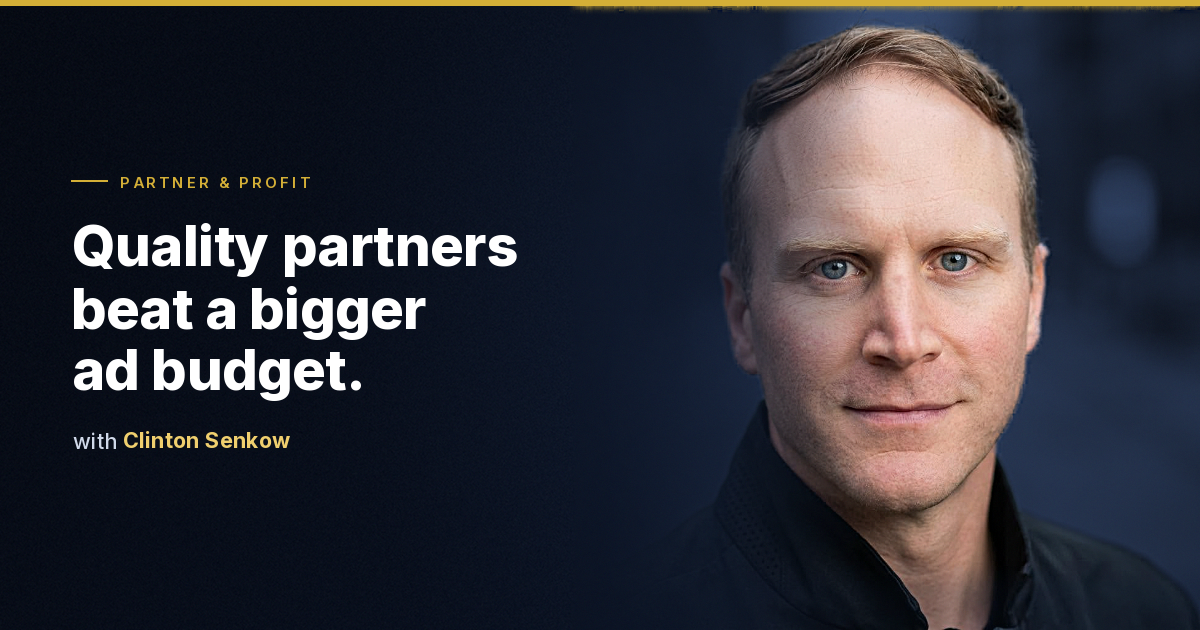
Clinton Senkow eats, sleeps, and breathes partnerships. Hockey scholarship. Business degree. Decade-plus in tech and partnerships—global account executive, director of partnerships, VP of partnerships. Media company in 2016. Consulting for hundreds of companies. Work inside a global startup accelerator community. Based in Canada. Building Partnerss.co (partners with an extra s)—a partnership discovery and intelligence tool he describes on the show.
Episode thesis in his words: rising paid CAC; warm intros convert better than hope-and-pray ads; two-way street; quality over quantity; brand halo through curiosity when you announce real partnerships; kill one-sided, inflexible deals.
Listen: Why Quality Partners Beat Big Advertising Budgets in Real Estate with Clinton Senkow
Team-leader checklist this week
- Audit last quarter. How often was the answer “raise the ad budget again”?
- List home-service lanes your clients need after closing. Mark who is preferred vs random.
- Pick one highest-rated provider. Book a joint content session this month.
- Write the two-way rule: what you send, what they send, how you measure both.
- Kill or rewrite one one-sided deal that only helps them.
- Announce one real partnership you already have. Halo does not work in secret.
- Put partner economics next to ads on one scoreboard. Owner. Touch. Outcome.
- Share the episode with leadership. Assign one owner to partner quality and one to co-content cadence.
FAQ
Why do quality partnerships beat big advertising budgets in this episode's framing?
Clinton's thesis: paid acquisition costs keep rising versus years prior, and warm introductions to someone else's clients, list, or community usually convert better than hoping cold ads find the right person. Quality over quantity. One right-fit partner can matter more than a long list.
How should teams build home service provider referral partnerships?
Find highest-rated, highest-reviewed providers. Create content together. Co-market, co-sell, and co-brand warm intros. Map who clients need before and after your service. Prefer real preferred status over a long unused vendor list.
What is the brand halo effect in real estate partnerships?
When a trusted local business puts you in front of their audience, you inherit trust—Grant calls it being encapsulated in the brand's halo. Clinton adds that curiosity spikes when you announce and show the partnership. Silent deals waste the halo.
What does a two-way street partnership mean, and what kills deals?
Lasting deals are reciprocal. Both sides get value. Cadence and iteration matter. Deal killers: walking in only for yourself, and zero flexibility when the other side has a different process. One-sided deals and rigid “only our way” plans fizzle.
How do partnerships sit beside paid ads instead of replacing them?
Keep ads that work. Add a warm-intro lane with quality partners. Track both on one scoreboard so partner economics can sit beside spend and help offset ad spend with partnership revenue over time. Start with one great partner, measure it, then add the next.
Next step
Want real estate partnerships vs paid ads built on quality partners, brand halo, and two-way home-service deals—not another blunt “raise the budget” meeting? Want preferred-partner economics beside the ads you already buy? See if your market is open: Apply / check market availability.
Listen to the full episode: Why Quality Partners Beat Big Advertising Budgets in Real Estate with Clinton Senkow
Questions this article answers
Clinton's thesis: paid acquisition costs keep rising versus years prior, and warm introductions to someone else's clients, list, or community usually convert better than hoping cold ads find the right person. Quality over quantity. One right-fit partner can matter more than a long list.