Nov 25, 2026·Grant Wise
Real estate joint venture partnerships: Clifford Walker on lane-of-genius, clear agreements, and affiliate rails
Real estate joint venture partnerships that keep you in your lane—Clifford Walker on 50-50 JVs, clear deals, and two-way affiliate rails.
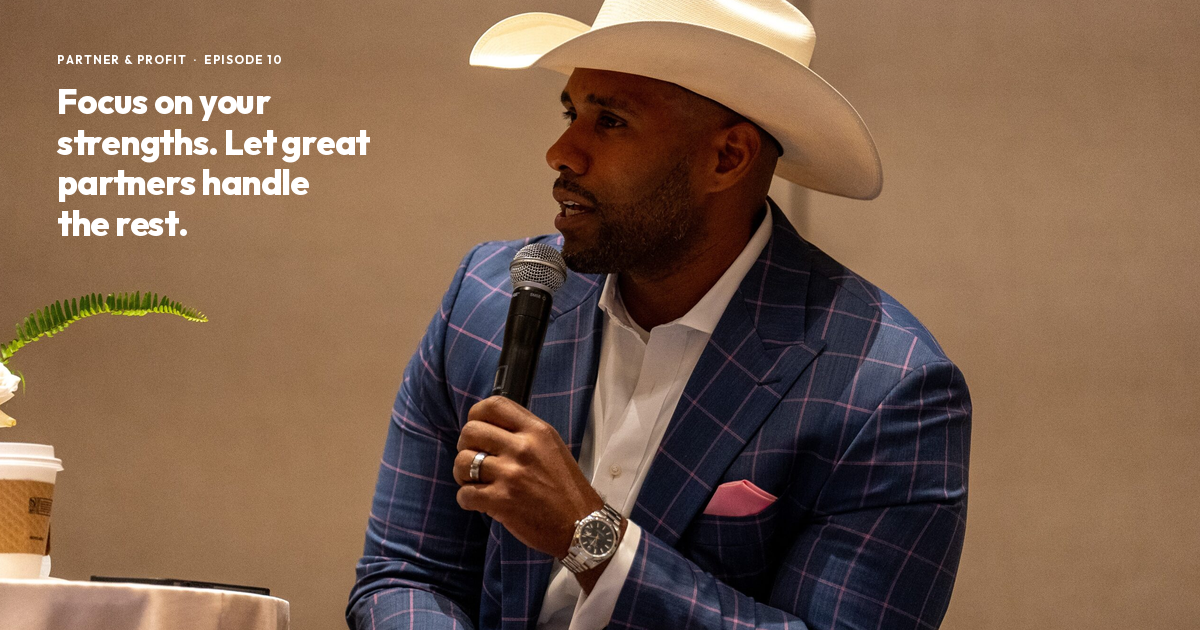
You do not grow by doing every job yourself.
You grow when the right person covers ads. You run the leads. You split the upside. You stay in the work that makes you dangerous.
That is the heart of real estate joint venture partnerships for team leaders already buying $10k+/mo in ads—or closing 100+ homes a year. Stop absorbing every skill on your books. Productize the handoff. Write a simple deal. Keep your lane.
Clifford Walker—the “Cowboy Closer”—built that model after a truck cab, not a brand deck. Here is the install.
Trying to run every job alone pulls you out of your lane
Clifford started investing in 2019. Before that he drove trucks for about seven years. He hated the work. Rural West Texas. One radio station that came in. Wholesaling talk on the air. He told his wife they were starting in real estate. Then he did the hard follow-through—conferences, meetups, coaches.
Coaching came later. Almost by accident. He ran what a Dallas mentor taught. Deals followed. Peers watched him work. People came to his house. Then they needed conference rooms. People saw him execute. Then they asked how to plug in. Same loop high-volume teams want with preferred partners.
The early lesson is blunt. Real estate runs on relationships. The more hands you shake, the more money you make. Not more skills on one person. More hands on the right jobs.
Productize the JV handoff (do not freestyle every deal)
When people wanted close access to his process, Clifford did not invent a new org chart. He offered a joint venture.
Partners cover Facebook ads—setup and spend. He runs the leads. They split deals 50/50.
He says he had about seven partnerships running at one point. He frames that as pouring gas on growth. He describes a rapid 10x effect. That is Clifford’s framing on the show. Not a Comarketing promise. Keep it tagged that way.
The lesson for volume teams is not “find seven random JV partners by Friday.” It is: productize the handoff.
- Who pays for attention?
- Who works the lead?
- Who owns the client promise?
- What is the split when a deal closes?
- What ends the deal clean if someone breaks their part?
If a partner is better at ads, inventory, or fulfillment, share the upside. That is one clean way partners help offset ad spend. Share the cost of attention. Share the upside of conversion. Ads do not have to disappear.
Stay in your lane of genius—partner before you dilute
Clifford’s warning is plain. People leave the lane that makes them effective. For him, that lane is talking to people. Books are not. Touching the books became a bad pattern. When leaders leave their lane, noise rises. Production falls.
His line is simple. You be good at your thing. I’ll be good at my thing. We’ll crush it together.
For teams at volume:
- Keep agents and leaders in money talks that matter.
- JV or prefer partners for specialty growth work and home-service lanes.
- Hire when the job is permanent and core.
- Partner when it is niche, bursty, or better owned by an expert.
- Revisit the mix. Clifford’s mix changed. Yours should too.
Lane of genius partnerships are not soft branding. They stop you from paying twice—once in cash, again in focus you cannot get back.
Clear deals beat handshake chaos
The cowboy brand does not mean cowboy chaos. Clifford lived through bad partnerships. That was part of the process.
His fix: simple joint venture agreements. Roles. Who does what. Not endless traps that tie you forever. A clean end if someone breaks their commitment. Be ready to go through people. Set expectations early. Include this: people will make mistakes.
That maps to preferred partner agreements:
- Scope of exclusivity
- Who pays for ads / who owns creative
- Lead ownership and speed-to-lead
- Split economics
- Exit triggers
If your “partnership” cannot survive a one-page clarity test, it is not ready for exclusive leads. Vague vibes turn good coffee into quiet resentment.
Hire vs JV is a living mix—not a personality test
Grant asks whether Clifford wrestled with hiring versus partnering. Clifford’s answer is both—and in order.
Partnerships created traction first. Hiring came later when he wanted more margin in-house. He reduced partnerships for a stretch. Now he looks for balance. Smaller strategic partnerships. When he brings people on, he asks if commission-only fits.
That shift matters for 100+ homes/year teams. Your mix of preferred partners, JVs, affiliates, and W-2/1099 seats should change as volume and margin change. Revisit it on a schedule. Do not freeze a model that worked at 80 deals and force it onto 200.
Name an owner for the mix review. Quarterly is fine. Cut or keep. Same discipline you use on ads.
Affiliates and community: cash beyond the next house
Clifford also builds strategic affiliates for tools his community needs. He cites categories like PropStream for comps and data. He wants two-way promotion. Not one-way product pushing.
His line: I don’t want to just push your product. I want you to push me.
That is the standard. Affinity without mutual push is a brochure. Align with operators who are actually doing deals. Trust rises when you get introduced. Empty logos do not.
He also points listeners to the Real Estate Corral—a national community helping people get into investing. Whether or not that is your model, the pattern matters. Community creates a hub. Partnerships, affiliates, and trust can live there. High-volume teams can build a lighter version. Alumni clubs. Preferred-partner councils. Past-client membership. Exclusive partners earn access by performance.
Affiliate revenue streams for real estate work best when the recommendation is real and the push goes both ways.
What Clifford Walker adds (proof, not the outline)
Clifford Walker—known as the Cowboy Closer—is a real estate investor and coach. Truck driver to investor starting in 2019. Coaching grew as peers watched him execute.
On Partner & Profit Episode 10 he covers:
- Relationship-first growth (“more hands you shake…”)
- JV pattern: partner covers Facebook ads, he runs leads, 50/50 split
- About seven partnerships at once and his 10x growth framing
- Lane of genius—stay specialized instead of doing every task alone
- Simple JV deals, roles, clean exits after bad fits
- Hire vs partner as a sequenced mix, not a forever choice
- Two-way affiliates and community authority (Real Estate Corral)
Listen: Real Estate Growth Hacks: Clifford Walker on Networking, Partnerships, and Affiliate Marketing
Team-leader checklist this week
- Map skills vs lane. What should you JV, prefer, affiliate, or hire?
- Productize one JV offer (who pays for ads, who works leads, clear split, clean exit).
- Write a one-page deal before volume hits—roles, money, exit.
- Audit three “partners.” Two-way push and performance—or one-way product push?
- Revisit hire vs partner mix this quarter. Name an owner. Cut or keep.
- Keep leaders in their lane of genius. Stop putting closers on books they should not touch.
- Put partner economics next to ads on one scoreboard. Shared media cost. Shared upside.
- Share the episode with leadership. Assign one owner to JV offers and one to deal hygiene.
FAQ
Who is Clifford Walker, and how did he enter real estate?
Clifford Walker is known as the Cowboy Closer—a real estate investor and coach. On the show he says he started investing in 2019 after hearing wholesaling content on the radio while driving trucks in rural West Texas. He drove trucks about seven years. Then he dove into conferences, meetups, and coaches. Coaching grew as peers watched him execute and results followed.
How did partnerships speed up his business?
He took in that the more hands you shake, the more money you make. He JV’d with people who would cover Facebook ads while he ran leads—splitting deals 50/50. At one point he had about seven partnerships running. He describes going roughly 10x quickly because of that model. That 10x claim is his framing on the episode—not third-party proof.
What does he mean by “lane of genius”?
People leave the lane that makes them effective. For him, that is talking to people. Books and tech tasks he is not built for pull him out. Partnerships let specialists stay specialized—“you be good at your thing, I’ll be good at my thing”—instead of paying for everything or doing it all alone.
What mistakes does he warn about in partnerships?
He went through bad partnerships. He recommends simple JV agreements that are not endless traps—roles clear, ability to end smoothly if needed. Be ready to go through people. Set expectations early. Include that people will make mistakes.
How do affiliates and community fit his later model?
He builds strategic affiliates for tools community members need (he cites categories like PropStream). He wants two-way promotion—not one-way product pushing. He points to Real Estate Corral as a national community helping people get into investing. Trust rises when you align with operators who are actually doing deals.
Next step
Want real estate joint venture partnerships that keep you in your lane, share ad cost and upside, and run on clear deals—not handshake chaos? Want that beside the ads you already buy? See if your market is open: Apply / check market availability.
Listen to the full episode: Real Estate Growth Hacks: Clifford Walker on Networking, Partnerships, and Affiliate Marketing
Questions this article answers
Clifford Walker is known as the Cowboy Closer—a real estate investor and coach. On the show he says he started investing in 2019 after hearing wholesaling content on the radio while driving trucks in rural West Texas. He drove trucks about seven years. Then he dove into conferences, meetups, and coaches. Coaching grew as peers watched him execute and results followed.