Nov 17, 2026·Grant Wise
Offset real estate ad spend with partnerships: Shon Kokoszka on who else should fund the pipe
Offset real estate ad spend with partnerships—Shon Kokoszka on brand ambassadors, brand halo, and sharing lead-gen cost with partners who win at close.
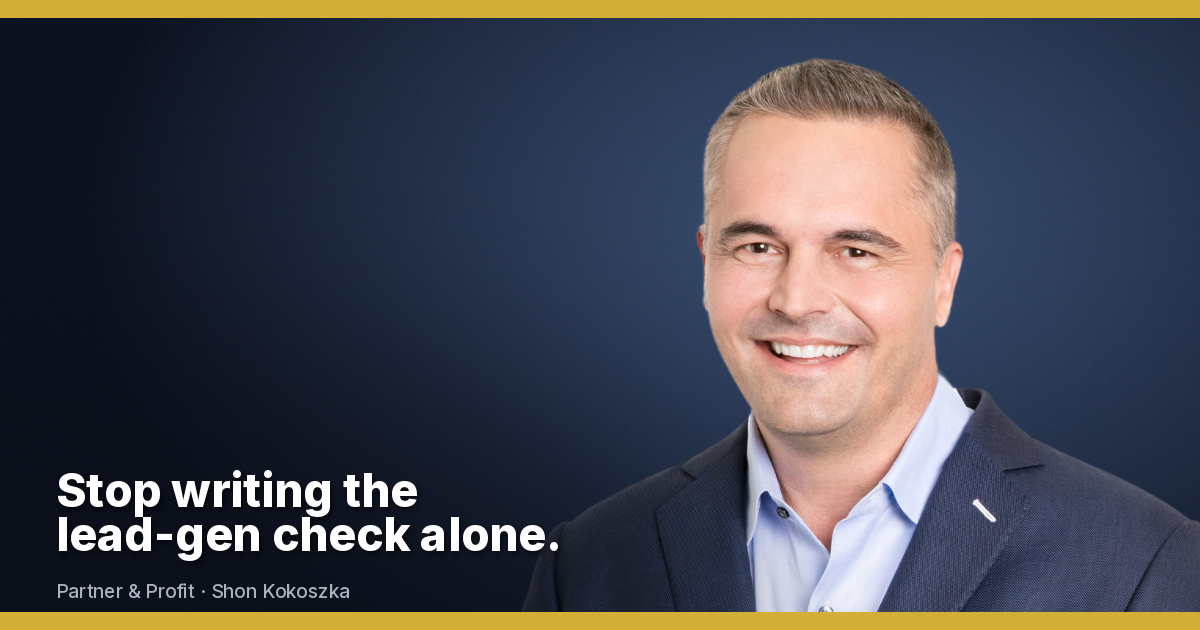
Why is the agent the only one writing the lead-gen check when a closing wakes up a whole home-services economy?
Think about your last month of ads. You bought the traffic. You paid the soft costs. You sat on the phone while the deal crawled. Then the house closed. A mover got paid. A painter got paid. A roof crew got paid. A dozen local shops got paid because that family moved.
You funded the front. They cashed the back.
That’s the lonely ad-budget problem. Team leaders who spend $10k+ per month on ads feel it first. So do shops closing 100+ homes a year. You already buy volume. The open question is simple. Will partners who win at close help offset real estate ad spend with partnerships? Or will you keep funding the whole pipe alone?
Here’s the install. Name who else wins when you close. Offer co-marketing that is real, not a coffee. Borrow trust with a clean brand halo. Stay RESPA-aware at a high level. Put partner-funded media next to your ad line on one scoreboard.
The lonely check: you buy the lead, they cash the close
Most teams treat lead gen like a solo bill. Ads. Portal leads. Soft costs. Follow-up pay. Then at closing, a crowd shows up who never wrote a check for that lead.
That’s not a guilt trip. It’s a design gap.
If you already spend serious money to create closings, net cost matters more than vanity lead count. A cheap lead that dies in follow-up still wastes cash. A partner lane that shares awareness cost—and sends exclusive work the other way—changes the math you bring to the leadership meeting.
Plain asks for your next ops huddle:
- Who gets paid because we closed? List the trades and shops that light up after keys.
- Who already wants our clients? Warm shops beat cold vendor decks.
- What do we give first? Audience access. Preferred status. Clean intros. Joint content. Not a vague “support us sometime.”
- What do we measure? Partner-funded media. Exclusive handoffs. Response time. Kept relationships. Put it next to ads.
- What do we cut? Partners who take intros and go quiet. Brand risk is not free.
You do not need a slogan about “zero cost.” You need a plan so you are not the only name on the lead-gen invoice.
Who else wins when you close
Shon Kokoszka puts the economy question on the table in Partner & Profit Episode 04. He cites a case study framed around Chris Waters’ brand ambassador idea in The Millionaire Real Estate Team. On every closed U.S. deal, an average of about $83,000 is described as flowing into the broader economy. Not just commission. Not just loan fees and title. Roofers. Carpet. Painters. Local shops that wake up because someone moved.
That $83k figure is Shon’s example on the show. It is not a Comarketing promise. Keep it tagged that way.
His follow-up question is the useful one. Why is the agent so often the only party funding lead gen when so many shops benefit from the close?
For a volume team, that question becomes ops:
- Map the home-service and local brands that already win when you close.
- Prefer exclusive, preferred lanes over random lead spam.
- Sell the win-win in plain talk. You create closings. They help fund awareness. You both care for the same clients.
That’s how you start to offset real estate ad spend with partnerships without pretending ads disappear overnight. Keep the ads that work. Add a second dial so partners share the front of the pipe.
Brand ambassadors and co-marketing: share the front of the pipe
Show notes and the show center on a Brand Ambassador style path. Real estate pros co-market with local service shops. Lead-gen cost stops being a solo bill.
Shon’s example on the show: Chris Waters’ brand ambassador program. As Shon tells it, that program raises over $350,000 a year in marketing support from partners who benefit from deals. Billboard and radio presence in Austin is part of that story. Again—show example. Not a promise for your market.
What transfers for your team is the design, not the dollar fantasy:
- Partners who benefit from closings help fund exposure.
- Cross-promo and careful list access multiply reach both ways.
- Preferred status beats another cold lead vendor when the client experience is real.
- Give first. Shon’s webinar story is concrete. He built an investor webinar with seven promo partners—planner, 1031 specialist, property manager, mortgage, insurance, CPA, attorney. He wrote their promo for them. They invited their lists. Trust moved because each partner’s audience already liked that partner. That is co-marketing as work—not a handshake meme.
If you want zero-base language from the show: Shon recalls Howard Brinton’s old line—“zero base your marketing”—as the seed. The modern install for a $10k+/mo team is simpler. Get partners into the customer-acquisition plan. Track the dollars and the intros. Do not treat co-marketing like charity.
Brand halo: stand next to brands your market already trusts
Grant names the brand halo effect on the show. You stand with trusted local brands. You announce a preferred partner. You make useful joint content. They share it because they are not a content company—you helped them show up. Their audience sees you next to a name they already like. Trust moves.
Shon’s caution matches the chance frame. Halo can help or hurt. Vet before you borrow someone’s glow. Check reviews. Ask people you trust. Weak partners stain your name the same way strong partners lift it.
For team leaders:
- Pick partners your clients would be proud you sent.
- Make preferred announcements mean something—speed, quality, exclusive lanes where they fit.
- Create one piece of joint content this month that both brands can share.
- Track access both ways: your audience to them, their audience to you.
Halo is not a logo collage. It is trust you can feel on the next booking call.
RESPA-aware design (high level—not legal advice)
RESPA comes up because agents ask. On the show, Grant explains the Comarketing model they discuss. It typically stays outside RESPA-regulated pairings. Example: not pairing agents with loan officers or title inside that platform model. Agents keep their own mortgage, title, and insurance ties. The platform connects many home-service categories outside those sensitive pairings.
Treat that as show talk. This is not legal advice. Stay above board. Work with solid people. Talk to your counsel or compliance lead before you invent a fee structure. Many useful home-service lanes sit outside the pairings agents worry about first. Still design clean.
The chance frame stays the same. Serve clients well. Share marketing cost with partners who win at close. Keep the structure clean so the program lasts.
What Shon Kokoszka adds (proof, not the outline)
Shon Kokoszka is a real estate coach and team leader. On the show he shares early-career production of 100+ buyer-side deals a year. Later, a team around 450 deals a year. Plus speaking and coaching work, including Icon Coaching context on the show.
His partnership thesis is blunt. Every business move he’s made traces back to a relationship or a partnership.
In Partner & Profit Episode 04 he makes the lonely-check case concrete:
- Why fund lead gen alone when a close wakes up a whole local economy (his ~$83k framing on the show).
- Brand ambassador / co-marketing so partners who benefit help fund marketing (Chris Waters ~$350k/year example as Shon tells it).
- Brand halo and preferred-partner trust transfer—with vetting so the halo does not cut the other way.
- Practical co-marketing installs like the multi-partner investor webinar that borrows lists instead of grinding one list alone.
Listen: The Secret to Zero-Cost Marketing for Real Estate Agents with Shon Kokoszka
Team-leader checklist this week
- List who gets paid because your team closes. Circle the shops that already want your clients.
- Pick one partner lane to upgrade from “nice lunch” to written co-marketing: offer, exclusive rules, content, and measure.
- Put partner-funded media and exclusive home-service intros on the same scoreboard as ads. Name an owner.
- Draft one preferred-partner note your agents can send without freestyling brand risk.
- Vet before halo. Reviews. Warm proof. Cut anyone who goes quiet after an intro.
- Keep mortgage/title/insurance ties clean and counsel-aware. Do not invent fee games from a podcast.
- Plan one joint value session where partners invite their lists—not only yours.
- Share the show with leadership. Assign one owner to “lonely check” math and one owner to partner cadence.
FAQ
What does “zero-cost” or “zero-base” marketing mean in this episode?
Show notes center on co-marketing with local service shops to zero-base lead-gen costs. On the show, Shon recalls “zero base your marketing” via partners. The old frame often used marketing services agreements. The point stays simple: the agent should not be the only party funding lead gen when many shops benefit from each closing.
What is the Brand Ambassador Program concept discussed?
Real estate pros co-market with local service shops. The show references Chris Waters’ “brand ambassador” approach from The Millionaire Real Estate Team. Partners who benefit from deals help fund marketing exposure. Shon cites Waters raising over $350,000/year through that program as show context—not a guaranteed outcome.
Why does Shon say the agent shouldn’t be the only one paying for leads?
Show framing: on every U.S. closed deal, an average of about $83,000 is described as flowing into the broader economy. Roofers. Painters. Carpet. More than commission, title, and loan fees. Question: why is the agent often the only one funding lead gen when so many parties benefit?
How does RESPA come up—and what’s the compliance posture in the conversation?
Show notes list RESPA guidelines as a topic. On the show, Grant explains Comarketing typically stays outside RESPA-regulated pairings. Example: not pairing agents with loan officers or title in the platform model they discuss. Agents keep their own mortgage, title, and insurance ties. They connect with many home-service categories outside those pairings. This is show talk—not legal advice.
What is the “brand halo effect” here?
You stand with trusted local brands. You become a preferred partner. Trust moves when you gain careful access to their audience—and they gain access to yours. Cross-promo and clean list exposure both ways. Vet hard. Halo can lift or stain.
Next step
Want partners who help offset real estate ad spend with partnerships—with owners, clean preferred lanes, and a scoreboard next to ads? Want that without turning your team into a vendor mess? See if your market is open: Apply / check market availability.
Listen to the full episode: The Secret to Zero-Cost Marketing for Real Estate Agents with Shon Kokoszka
Questions this article answers
Show notes center on co-marketing with local service shops to zero-base lead-gen costs. On the show, Shon recalls “zero base your marketing” via partners. The old frame often used marketing services agreements. The point stays simple: the agent should not be the only party funding lead gen when many shops benefit from each closing.