Sep 20, 2026·Grant Wise
Preferred partners for real estate teams: Justin Havre on serving clients and funding growth
Preferred partners for real estate teams—Justin Havre on higher client care, stay-useful after close, and partner income that funds ads.
It’s 9pm. The buyer’s water heater just died.
They don’t dig out your closing binder. They don’t text the agent who got them the keys. They Google “plumber near me” and book whoever answers first.
That was your chance to serve them again. To be useful after the keys. To send a partner you actually trust. When a stranger gets that call, you miss the chance to take care of them at a higher level—and the referral that was sitting right there often doesn’t come back.
That’s what strong preferred partners for real estate teams make possible. Not a scare story. A real chance to serve the client after close, stay top of mind, and turn care into referrals that compound. You already paid to win that household. The partnership bench is how you keep earning the right to help—and how partner income can offset ads and fund the next wave of marketing.
Here’s the install. Vet before volume. Stay the go-to after close. Put partner work on a scoreboard next to ads. Keep the service bar high. Money from the ecosystem goes back into the pipe—or it evaporates into “misc.”
Serve the client at the highest level: vet before you send volume
You spent real money to win that client. Ads. Time. Trust. The next step is a chance to send someone who treats them like your best referral—because that’s what this moment is.
A great handoff makes you look like the person who still has their back. It shows you care past the keys. That care is what brings sisters, coworkers, and neighbors back to your team.
Justin Havre puts the bar in plain words. Align with service providers who deliver a five-star client experience. When partners clear that bar, they help you serve at a higher level. When they don’t, you miss the chance to create the kind of care that brings referrals back. At volume, that gap multiplies either way. His shop isn’t guessing. Show notes and the episode intro put the team at over 1,100 families served in a year (intro cites about 1,173) and a roster of over 80 agents as the #1 eXp team in Canada.
Use this vet filter before you send volume. It fits a team that spends $10k+ per month on ads. It also fits a team that closes 100+ homes per year.
- Proof first. Have any of your agents or clients already had a great experience with them? Warm proof beats a cold pitch deck.
- Check the public scoreboard. Google reviews matter. Clients check them before they book. So should you.
- Meet for alignment. Sit down. Confirm values, response time, and how they treat VIP clients.
- Test the handoff. Will they pick up when you send volume? Do they track the opportunity? Silence after a warm intro is a cut signal.
- Write the service rule. On time. Do what you say. White-glove feel. Extra value when it helps the client. Put it in words agents can share.
If a partner can’t clear that bar, don’t “give them a few leads to try.” You’re choosing who gets to help your client next. Treat that choice like it matters—because it does.
Stay useful after keys—and watch referrals compound
Most teams treat close as the finish line. Client gets keys. Agent jumps to the next file. The preferred list sits in a folder nobody opens.
Six months later the furnace fails in January. The client calls the first ad that pops up. When they finally move again, the agent who stayed useful gets the listing. That’s the opportunity: stay in the room long enough to be the one they call.
Justin’s frame is the fix. The relationship should continue after the transaction. You become the source for the plumber, the HVAC tech, carpet cleaning, AC tune-ups—anything around the home. You’ve already earned trust on the biggest purchase. Use it to keep serving.
Episode context that makes the math real for Canada: the average Canadian moves seven times in a lifetime. Stay top of mind through trusted recommendations and you can ride more than one transaction with the same household. Each of those clients also knows people who will buy or sell. More care after close → more chances to help → referrals that compound.
Practical install:
- Say it at close. Tell the client you’re the person to call for anything around the home. Say it out loud. Put it in the follow-up email.
- Resend the bench. Don’t assume they saved the vendor list. Send it again when seasons change.
- Train the mindset. This is a long-term relationship, not a one-and-done file. Agents who skip the reminder train clients to shop strangers—and miss the chance to stay useful.
- Audit the leak. Where do post-close threads die after first touch? That gap is where your next chance to serve quietly goes to someone else.
If your preferred-partner pipe ends at one lunch and one closing gift, you don’t have a program. You have a calendar entry with no owner.
Partner dollars that offset ads and fund the next wave
Preferred partners aren’t only a care layer. Done right, they can help offset lead-gen cost and raise lifetime value per client. That’s why now matters for teams already buying volume.
Justin’s model is blunt. Vendors want to attach to your transaction. Mortgage. Inspectors. Repairs. Home services. If you monetize that ecosystem in a clean way, the funds show up on the P&L. His team puts that money back into marketing so agents see the loop: recommend the vetted bench, generate more leads for the team. Partner income offsets ad cost. Then it reinvests into more marketing. The care you give clients funds the pipe that brings the next ones.
Grant’s framing in the episode puts the scale in plain view. Partnership dollars that fund thousands of leads can turn into real production even at a low conversion rate—without inventing a magic ROI chart in this article. Listen for the full math. The lesson for you is simpler. Name the line item. Track it. Reinvest it. Don’t let partner revenue disappear into “misc.”
Rules that keep this honest:
- Client experience first. Money only works when the service is five-star. Keep that order.
- Track like ads. Owners. Outcomes. Follow-up. If you can’t see intros and results, you can’t manage the pipe.
- Tell agents the reinvest story. They need to know why the preferred list exists. Vague “support the team” won’t change behavior. Show them how partner dollars fund leads.
- Don’t invent fairy-tale ROI. Use your own numbers. Use the episode for Justin’s framing. Keep the blog factually clean.
Give partnership work its own dial
Paid media can put your name in front of buyers. Preferred partners sit with a homeowner when they need help around the home—and turn that care into referrals and partner income that ads alone can’t create. Some high-volume teams run growth 100% through ads. Then cost per lead rises. Creative gets tired. The pipe stalls. A warm partner layer gives you another dial when you need it.
Give partnership work its own scoreboard. Not a networking hobby:
- Paid — Reach and speed. Measure cost per lead, appointments, and closes.
- Sphere / organic — Reputation and inbound. Measure content, DMs, and past-client touches.
- Preferred partners — Trust transfer and post-close care. Measure intros sent, response time, client feedback, kept relationships, and partner dollars reinvested.
The point isn’t “quit paid.” The point is this: when volume dips, you should have more than one dial. Give partnership work a weekly review. Treat it with the same care you give ad spend. That’s how you keep serving clients and keep funding growth.
Justin’s team hit the hard part early. Without a system, tracking vendors, supporting them, and handling any financial model was another giant project. He says co-marketing made the ops trackable and full steam—with a concierge owner inside the org running it. At recording, they were already past 30 partners, with a target of over 100 vendors by the end of 2026. That’s not a handshake list. That’s a line item with an owner—and a growth lever next to ads.
Use this filter in leadership meetings. If paid CAC rises 20%, what partner or go-to lever moves the same week? If the answer is “nothing,” you don’t have a dual system. You have ads with a vendor contact sheet.
Keep the bar high so the care compounds
A preferred list without cut rules becomes a junk drawer. Agents stop trusting it. Clients get uneven care. You miss the chance to turn great service into referrals—and you keep buying ads to replace the ones that didn’t come back.
Justin’s bar for a good partner is clear. Provide great service. Do what you say. Be on time. Treat the client like a white-glove experience. Add value when you can—save them money or give extra service—so the team looks good and the vendor looks good.
Set expectations before volume:
- Response window. How fast do they take the handoff?
- Communication. Who updates the agent and the client?
- Quality bar. One messy job can end the seat. Say that out loud so keepers know the standard.
- Feedback loop. If something slips, you fix it together or you cut. Protect each other’s businesses—and protect the client’s chance at a five-star experience.
Some partners on Justin’s bench convert opportunities at about 85% in his telling. That number only stays real if weak seats get cut. Keepers get volume. Seats that don’t serve get removed so the rest can compound.
When owners, service rules, and cut/keep decisions are written, organic referrals stop resetting every month. Partnership work becomes a real lever. It can offset ad pressure. It can fund more marketing. It’s not a vague “nice to have.”
What Justin Havre adds (proof, not the outline)
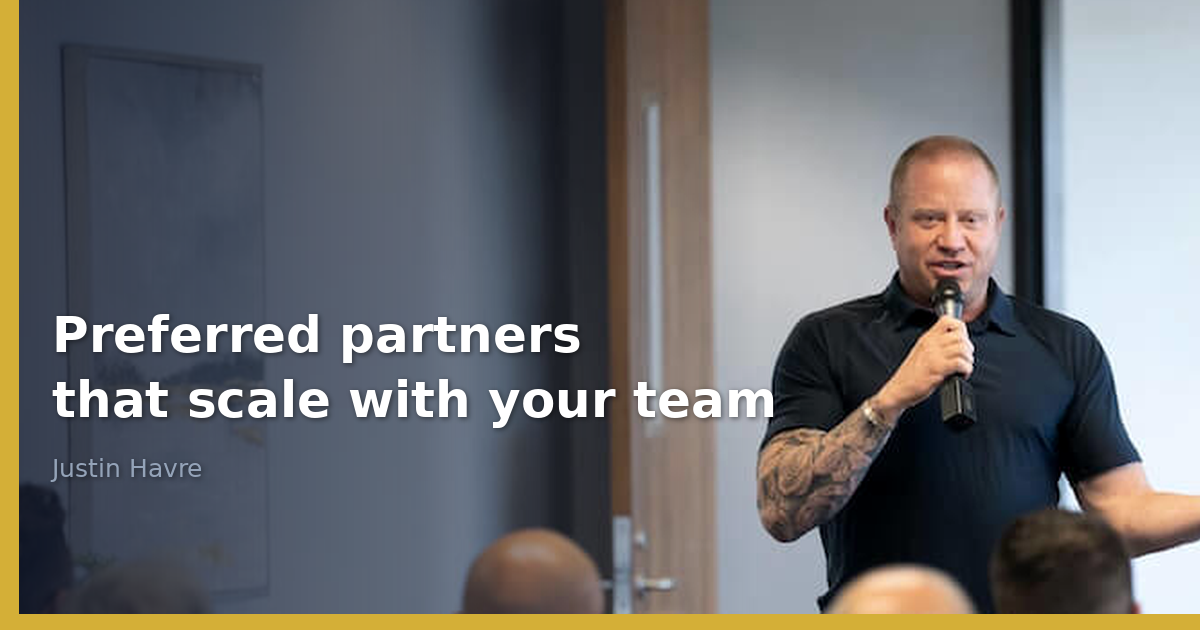
Justin Havre leads the #1 real estate team at eXp in Canada. In Partner & Profit Episode 01 he shares how a volume shop builds preferred partners as client care and growth—not as random networking.
Locked episode facts:
- About 1,173 families served in a year (show notes: over 1,100)
- Roster of over 80 agents (intro: almost 90)
- Average Canadian moves seven times in a lifetime
- 30+ partners live; internal goal of 100+ vendors by end of 2026
- Some partners converting opportunities at about 85% in his telling
- Co-marketing used to track referrals, support vendors, and keep the program from becoming a second full-time ops project
His blunt line lands for team leaders: we should have started this 20 years ago. Delayed payoff is the edge. Instant-reply culture trains leaders to quit when the partner lunch doesn’t pay next week. Volume rewards teams who stay useful long enough for the homeowner to call them first—and who reinvest partner dollars into the next wave of leads.
Listen: How Justin Havre’s Team Leverages Partnerships to Win in Real Estate
Team-leader checklist this week
- Map current vendor, mortgage, and home-service relationships. Mark where you can raise the care level.
- Write a five-point vet filter. Reviews, agent proof, meeting, handoff test, service rules.
- Name one owner for preferred partners. Put intros, response time, feedback, kept relationships, and partner dollars on a board next to ads.
- Script the post-close “call us for anything around the home” line. Put it in email and agent training.
- Decide where partner economics show up on the P&L. Reinvest rules beat “misc income.”
- Upgrade or cut one relationship so the bench serves clients at a higher level.
- Pick one give-first partner move this week. An intro, a client save, or a clean cut that protects the rest of the list.
- Share the episode with leadership. Assign one owner per install above.
FAQ
Why do preferred partners for real estate teams matter at volume?
They let you serve the client at a higher level after close. Vetted partners turn trust into care, care into referrals, and partner income into ad dollars you can reinvest across the whole roster.
How should team leaders vet home service partners?
Use proof from agents and clients. Check Google reviews. Meet for alignment. Test response time and tracking. Write service rules before you send volume.
How do preferred partners raise lifetime value after closing?
You stay the go-to for home help, not a one-and-done agent. Clients remember you when they need service—and when they move again. Referrals compound from the same trust.
How does Justin Havre’s team use technology with partners?
They use co-marketing tools to track vendor partnerships and referrals. That keeps the program from becoming a second full-time ops project.
Why build a preferred-partner ecosystem now?
Partner economics can help offset lead-gen cost and fund more marketing. They also deepen client care. For teams already buying ads or closing volume, starting now means more chances to serve—and more referrals coming back.
Next step
Want preferred-partner economics with owners, cut rules, and a scoreboard next to ads? Want that without turning your team into a vendor-management mess? See if your market is open: Apply / check market availability.
Listen to the full episode: How Justin Havre’s Team Leverages Partnerships to Win in Real Estate
Questions this article answers
They let you serve the client at a higher level after close. Vetted partners turn trust into care, care into referrals, and partner income into ad dollars you can reinvest across the whole roster.